When you click the link, it will take you to the corresponding page.
江戸前小肌酢〆
(Edomae Kohada Sujime)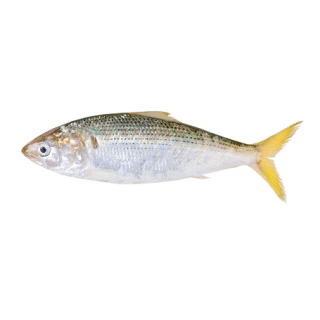
Kohada is a shusseuo (fish with different names as it grows) and an essential ingredient in Japanese cuisine. When it is less than 5 cm, it is called Shinko, meaning "young fish." At this stage, it is used as sushi with 3-5 fish placed on one piece. When it grows to about 10 cm, it is called Kohada, meaning "small shine," referring to the beauty of its silvery scales. Kohada is the most commonly used stage in sushi restaurants, often marinated to remove any fishy smell and enhance umami flavor. At about 15 cm, it is called Nakazumi, which is larger and oilier with a richer flavor than Kohada. When it reaches 20 cm or more, it is called Konoshiro, which is rarely used as sushi but is instead simmered or grilled. In the past, samurai avoided eating Konoshiro because its name, "この城 (Kono Shiro)," means "this castle," which was considered disrespectful as it symbolized eating their own castle. These stages and names represent the growth and quality of Kohada and highlight the importance of a chef's skill in preparing it.
江戸前金目鯛炙り
(Edomae Kinmedai Aburi)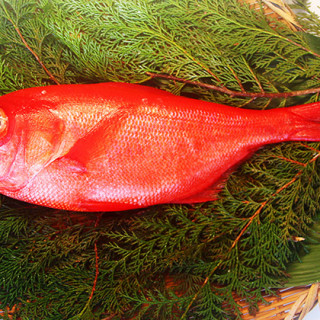
Kinmedai (Golden Eye Snapper) typically grows to 30–50 cm and is in season during winter, when it is the fattiest and most flavorful. Its flesh is tender, sweet, and rich in umami. It is commonly used in simmered, grilled, or steamed dishes, with soy sauce simmering being especially popular in Japan. When used for sushi, its skin is often lightly seared to enhance the flavor, or it is served fresh as sashimi. Its tender texture and natural sweetness make it an excellent sushi ingredient.
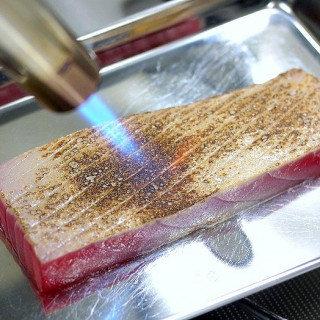
"Aburi" is a noun derived from the verb "Aburu" (炙る) in Japanese, which means to lightly sear or grill the surface of ingredients using direct flame. Unlike general grilling methods that evenly cook the entire ingredient, Aburi involves searing only the surface while leaving the inside uncooked. It is a cooking technique that allows for a contrast in texture and a smoky flavor between the outer and inner parts of the ingredients. Aburi sushi (炙り寿司), where the surface of fatty fish such as salmon or tuna is seared, is a representative example of Aburi cuisine. Even mild white-fleshed fish like sea bream can be enhanced in flavor and texture by searing the skin.
江戸前天然エンガワ
(Edomae Tennen Engawa)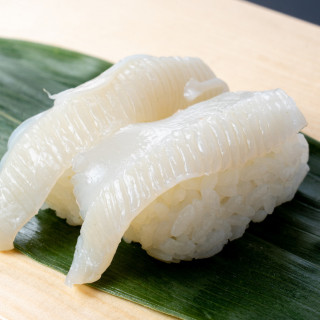
Engawa refers to the part of the fish near the fin base, typically from flounder or sole. The name originates from "engawa" (veranda), as the fish's edge resembles it. As sushi, it is characterized by its translucent white appearance, chewy texture, and rich flavor due to its fat content.
江戸前真いわし酢〆
(Edomae Maiwashi Sujime)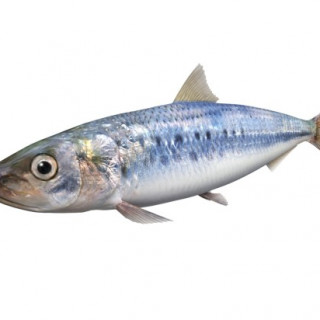
Iwashi (sardine) is a small bluefish, typically about 10–20 cm long. It is rich in fat, offering a bold flavor, with its peak season from summer to autumn. The kanji "鰯" originates from "weak" (弱), reflecting its quick spoilage. As sushi, freshness is crucial, showcasing its rich, fatty taste and smooth texture.

Provided by SURF